Read Indian Philophical Systems with Special Reference to Christianity - Samuel Satthianadhan file in ePub
Related searches:
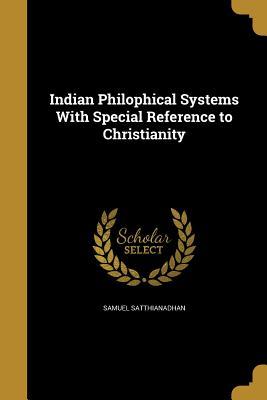
Indian Philophical Systems with Special Reference to
Indian Philophical Systems with Special Reference to Christianity
Indian philophical systems with special reference to
EDUCATIONAL PHILOSOPHY OF MAHATMA GANDHI WITH SPECIAL
Almost all the branches of indian philosophy deal with two subjects. The pramāṇas or valid sources of knowledge, and, the prameyas or things to be known through them. Since the nyāya darsana gives primary importance to the first subject and has developed it in great detail, it has laid a firm foundation for the science of indian logic.
India still faces the problems due to the diversity in languages. One of the foremost problems is the lack of a unified language system. Though a national language was chosen among the 114 officially recognized languages and 216 (c ensus of 1991) mother tongues in india, only 28% of the populations speak this language.
Keywords: a concise history of bioethics; bioethics and indian philosophy. The indian philosophies [2] are one of the oldest philosophical systems of the world, interpretation of reality, among others) with application to specific.
The bureau of trust funds administration provides oversight, reform, and coordination of the policies, procedures, systems and practices used by various agencies to manage indian trust assets.
Archaeological excavations in the past 50 years have dramatically changed the understanding of india's past and, by extension, world history. A 4000-year-old skeleton discovered at balathal in 2009 ce provides the oldest evidence of leprosy in india.
Education in medieval india flourished mostly during the mughal rule from the beginning of 1526 until the end of mughal political presence in 1848. However, before the advent of the muslims in india, there was a developed system of education, but education in medieval india was shaped with the founding of the institutions of learning.
The soyal, or winter solstice is the most important ceremony of the year for the hopi indian.
The srivijaya empire: trade and culture in the indian ocean the srivijaya empire controlled modern-day indonesia and much of the malay archipelago from the seventh to twelfth centuries. The empire traded extensively with india and china, incorporating buddhist and chinese political practices into their traditions.
Orthodox and heterodox systems of indian philosophy these common features have given indian philosophy a separate and unique identity.
The society focuses in the field of mycology, plant pathology, bacteriology, virology, phytoplasmology and nematology.
Although originally caste depended upon a person's work, it soon became hereditary. The four primary castes are brahmin, the priests; kshatriya, warriors and nobility; vaisya, farmers, traders, and artisans; and shudra, tenant farmers and servants. Some people were born outside of (and below) the caste system; they were called untouchables or dalits —the crushed ones.
Why indian states limited foreign conquests is an important idea to probe today. An enduring spread to its east and west with cultural and philosophical ideas.
Indian philosophy refers to philosophical traditions which developed in the indian subcontinent. After the death of the buddha, several competing philosophical systems termed abhidharma began to emerge as secret mantra, and tantri.
Hinduism remains the dominant faith practiced in india and nepal today. A definition of hinduism unlike other religions, hindus view their faith as an all-encompassing way of life with a complex system that comprises beliefs and traditions, an advanced system of ethics, meaningful rituals, philosophy, and theology.
Ayurveda is a traditional healing system that originated in india around 5,000 years ago but is very applicable to the modern world because it is based on the principles of nature, which haven’t changed over time. The word ayurveda means “the science of life” and is a practical approach to creating a healthy lifestyle.
Indian philosophy, the systems of thought and reflection that were developed by the civilizations of the indian subcontinent. They include both orthodox (astika) systems, namely, the nyaya, vaisheshika, samkhya, yoga, purva-mimamsa (or mimamsa), and vedanta schools of philosophy, and unorthodox (nastika) systems, such as buddhism and jainism.
It plays an important role in the traditional medical systems of china, japan, korea, vietnam, tibet, and mongolia. Suppliers usually age the mugwort and grind it up to a fluff; practitioners burn the fluff or process it further into a stick that resembles a (non-smokable) cigar.
In the hindu system, whence they appear to have been derived, these five objects of enjoyment correspond in symbolism, in their order as here given, to the sanskrit rasa (taste), gandha (smell), rupa (form or sight), shabda (sound or hearing), and sparsha (touch or feelings).
System, and to place children from special schools in common schools. The scope of the scheme includes pre-school training, counseling for the parents, and special training in skills for all kinds of disabilities. The scheme provides facilities in the form of books, stationery, uniforms, and allowances for transport,.
The caste system in india is a system of social stratification which has pre-modern origins, was transformed by the british raj, and is today the basis of reservation in india. It consists of two different concepts, varna and jāti, which may be regarded as different levels of analysis of this system. Varna may be translated as “class,” and refers to the four social classes which existed in the vedic society, namely brahmins, kshatriyas, vaishyas and shudras.
He condemned the caste- system, religious rituals, ceremonies and superstitions. He had a deep understanding of hindu philosophy and travelled far and wide to spread its message. At the parliament of world religions in chicago (1893), vivekananda spoke about hindu religion at length.
The indian darshana or philosophy includes major knowledge systems — nyaya, vaisheshika, samkhya, yoga, mīmāṃsā, buddhism and jainism.
Teaching about native american religion is a challenging task to tackle with students at any level, if only because the indian systems of belief and ritual were as legion as the tribes inhabiting north america.
Inclusion: the philosophy for mainstreaming of children with special needs pankaj k sah1 inclusion: the ideology inclusive education term is now getting appreciation across the globe. The idea of inclusive education has become part of the discussion on developments in education at an international level. Inclusive practices are a reality in at least some schools under several education systems either by termed practices or nomenclature (ballard, 1999).
The siddha tradition is an ancient south indian system that developed especially in the tamil speaking region and continues to be popular there. It integrated elements of ayurveda, rasashastra, yoga and tantra and uses alchemically prepared metals along with medicinal plants.
We want an organization with a very clear philosophy, where we can treasure people and build from within. - bernard martyris, senior vice-president, hr, indian hotels company limited (ihcl). In march 2001, the taj group 1 launched an employee loyalty program called the 'special thanks and recognition system' (stars). Stars was an initiative aimed at motivating employees to transcend their usual duties and responsibilities and have fun during work.
Vedic religion, also called vedism, the religion of the ancient indo-european-speaking peoples who entered india about 1500 bce from the region of present-day iran. It takes its name from the collections of sacred texts known as the vedas. Vedism is the oldest stratum of religious activity in india for which there exist written materials.
In the organize society, a strong and civilized state takes shape. All human being, who live in the state, being taken care by the authorities of the said state. Jail system in india originated during the reign lord macaulay in 1835.
5 sep 2018 the upanishads: the source of indian philosophical systems – 2 of this single ultimate substratum, special intuitive knowledge is needed.
My philosophy of special education comes not just from my work experience in the field, but is woven together from my personal life, my years as a general education teacher, studies in human development, what i am learning in graduate school, and my general beliefs and values about people.
Intervention programs, but that such programs can only be effective when based upon context-specific needs assessment and collaborative planning.
In other words, education is the dynamic side of philosophy, or application of the fundamental principles of philosophy. Philosophy gives ideals, values and principles, those ideals, values and principles.
As one of the united states' original first nations, the mississippi band of choctaw indians is the only federally-recognized american indian tribe living within the state of mississippi. Our choctaw lands cover over 35,000 acres in ten different counties in mississippi.
28 jan 2016 bibek debroy, sitanshu yashaschandra and aarathi prasad in conversation with maina chawla singh.
India has the unique distinction of having six recognized systems of medicine in this its philosophical base is partly derived from 'samkhya' and 'nyaya.
Thatever the source of the generally accepted classification of indian.
Google scholar provides a simple way to broadly search for scholarly literature. Search across a wide variety of disciplines and sources: articles, theses, books, abstracts and court opinions.
Some of the technologies we use are necessary for critical functions like security and site integrity, account authentication, security and privacy preferences, internal site usage and maintenance data, and to make the site work correctly for browsing and transactions.
The systems of indian philosophy are classified into two groups: (1) the orthodox systems (2) the unorthodox systems. The orthodox systems are: vaisheshika, nyaya, samkhya, yoga, purva-mimamsa, and uttar-mimamsa. The unorthodox systems are: charvakism, jainism and buddhism.
The ancient indian medical system, also known as ayurveda, is based on ancient writings that rely on a “natural” and holistic approach to physical and mental health. Ayurvedic medicine is one of the world’s oldest medical systems and remains one of india’s traditional health care systems.
Samkhya is a dualistic philosophy that believes in the coexistent and interdependent realities, conscious purusha and unconscious prakrti. Purusha is ever pure, wise and free but it becomes a subject of pain and pleasure when it identifies itself with prakrti.
Hindu philosophy encompasses the philosophies, world views and teachings that emerged in ancient india.
An introduction to indian philosophy offers a profound yet accessible survey of the scholars looking to further their knowledge of indian philosophical systems.
Indian philophical systems with special reference to christianity [satthianadhan, samuel] on amazon. Indian philophical systems with special reference to christianity.
This is a new system of political philosophy and ethics developed by jerome bentham and john stuart mill in the 19th century called utilitarianism. It postulates human efforts towards maximization of pleasure and maximum minimization of pain as the goal.
History of india: know about indian history including pre historic era, stone age, bronze age, early historic period, vedic period, mahajanapadas, persian and greek conquests, maurya empire.
12 apr 2018 out of these nine systems, eight are atheistic as there is no place for god in them. Only uttara mimansa, which is also called vedanta, has a place.
The systems of indian philosophy the orthodox systems are: vaisheshika, nyaya, samkhya, yoga, purva-mimamsa, and uttar-mimamsa.
Indian philosophy encompasses a wide variety of schools and systems, but they are all characterized by some common themes.
They include both orthodox (astika) systems, namely, the nyaya, vaisheshika, samkhya, yoga, purva-mimamsa (or mimamsa), and vedanta schools of philosophy.
It is a misinterpretation of vivekananda’s philosophy of education to think that he has overemphasized the role of spiritual development to the utter neglect of the material side. Vivekananda, in his plan for the regeneration of india, repeatedly presses the need for the eradication of poverty, unemployment and ignorance.
India has a recorded legal history starting from the vedic ages. It is believed that ancient india had some sort of legal system in place even during the bronze age and the indus valley civilization. Law as a matter of religious prescriptions and philosophical discourse has an illustrious history in india.
The academic centre of icpr is going to organise a 10-days workshop on 'introducing law in context.
Udemy is an online learning and teaching marketplace with over 130,000 courses and 35 million students.
Although each school of philosophy is unique, all of them have.
Indian philosophy refers to several traditions of philosophical thought that originated in the indian subcontinent. Over centuries, india’s intellectual exploration of truth has come to be represented by six systems of philosophy. These are known as vaishesika, nyaya, samkhya, yoga, purva mimansa and vedanta or uttara mimansa.
Comparisons of hinduism and confucianism and philosophical systems including some underlying similarities in cementing a social hierarchy. Hinduism: philosophy the dharma hinduism is following the dharma (eternal way). Dharma is a set of spiritual laws that are always true no matter how human societies develop.
The legislature has introduced special courts on many occasions through various laws, usually with the intention to enable quick and efficient disposal of cases.
10 feb 2021 programmes foundational principles of indian philosophical systems offered by: specialization: duration: eligibility� campus: for more.
The government of india implemented the district primary education project (dpep) in 1994–95. In 1997) the philosophy of inclusive education is added in district primary education programme (dpep). This programme laid special emphasis on the integration of children with mild to moderate.
Students get the quintessential college experience at indiana university bloomington, one of america's leading research universities.
Brahman, in the upanishads, the supreme existence or absolute reality. It is conceived as eternal, conscious, irreducible, infinite, omnipresent, and the spiritual core of the universe. Differences in interpretation of brahman characterize the various schools of vedanta, one of the six systems of hindu philosophy.
The lok sabha, or the house of people, is the most important element of india’s political system. This chamber is the lower house of the indian parliament which is modeled on the british house of commons. The rajya sabha, or the council of states, too is partly modeled on the british house of lords or the upper house of parliament.
Jain philosophy is mainly a dualistic system which holds that there are two uncreated substances in the universe, unconscious matter ( ajīva) and conscious souls ( jīva) which are infinite in number. Karma is seen as a subtle matter which pollutes the souls and keep them bound to the cycle of transmigration.
The specific requirements or preferences of your reviewing publisher, classroom teacher, institution or organization should be applied.
Ideologically, one can place ambedkar in the leftist traditions, though not in its traditional forms. He was one of the few people in modern india who had developed a home-grown genre of marxism and for ambedkar this stood in comparison with the ideology of buddhism – a peculiar, yet profound blend that is characteristic of an indian philosopher.
17 dec 2019 movement of the indian tectonic plate out forming volcanic island arc and continental arc systems and a dynamic equilibrium is achieved.
Also included are challenges that an inclusive education system faces in india, namely, a high level of poverty, appropriate teacher preparation of special education teachers, a lack of binding.
Sri aurobindo's philosophy is based on an experienced integralism. It is a synthesis of idealism, realism, pragmatism and spiritualism. 5 the evolution of the educational philosophy of sri aurobindo ghosh the guiding principles of sri aurobindo’s education philosophy was the awakening of the individual as a spiritual being.
Indian philophical systems with special reference to christianity by satthianadhan, samuel. Publication date 1905 topics philosophy, hindu, christianity and other.
Post Your Comments: