Read online Rubrics for Formative Assessment and Grading (Quick Reference Guide) - Susan M Brookhart | PDF
Related searches:
How to Create and Use Rubrics for Formative - ASCD Book
Rubrics for Formative Assessment and Grading (Quick Reference Guide)
How to Create and Use Rubrics for Formative Assessment - ASCD
How to Create and Use Rubrics for Formative Assessment and
Buy How to Create and Use Rubrics for Formative Assessment and
How to create and use rubrics for formative assessment and grading
Grading Rubrics Academy for Teaching and Learning Baylor
Rubrics for Assessment - NIU - Center for Innovative Teaching and
Formative and Summative Assessments Poorvu Center for
A First Step Towards Synthesizing Rubrics and Video for - yOUlearn
How To Create And Use Rubrics For Formative Assessment And
(PDF) How to Create and Use Rubrics for Formative Assessment
Criteria Cards and Rubrics: Tools for Formative and Summative
Formative and Summative Assessment - NIU - Center for
How to Create and Use Rubrics for Formative Assessment and
Writing Rubrics for Formative and Summative Assessment
Formative and Summative Assessment • Center for Excellence in
Creating and Using Rubrics for Assessment University of
Using Rubrics for Formative Assessment: The Impact of Formative
The use of scoring rubrics for formative assessment purposes
(PDF) The Use of Scoring Rubrics for Formative Assessment
Using the Formative Assessment Rubrics, Reflection and
FROM How to Create and Use Rubrics - We Are Teachers
Simple Rubric Examples for Teachers
Interactive Textbooks - IBDP and IGCSE - kognity.com
Designing Grading and Feedback Rubrics
Assessment is often divided into formative and summative
Using formative assessment rubrics in Visual Arts Express and
Developing Single Point Rubrics for Formative Assessment
[PDF] The Use of Scoring Rubrics for Formative Assessment
Formative Assessment and Differentiation Rubric
Best Practices for Designing Effective Rubrics - Teach Online
Intelligent Textbooks - IBDP and IGCSE - Book a Demo
Rubrics and Checklists Teaching & Learning Resource Hub
Formative Assessment, Rubrics, and (that pesky ol' issue of) Grades
Social-emotional rubrics for formative assessment: Psychometric
Rubrics Center for Teaching & Learning
Rubrics for Formative Assessment - Free Shipping Available
Using Formative and Summative Assessments in K-8 Classrooms
Formative Assessments and Rubrics - St. Peter Claver
11 Rubrics and Assessments ideas formative assessment
Creating and Using Rubrics Assessment and Curriculum
Evaluation Rubrics a Valuable Tool for Assessing eLearning
Formative Assessment, Rubrics, and (that pesky ol’ issue of
Essential Assessments Rubric – A resource for teachers of
Developing an Interim Formative Assessment and Writing Rubric
Creating and Using Rubrics - Eberly Center - Carnegie Mellon
Digital Technology Tools for Implementing Formative
Rubrics for Assessment - University of Wyoming
iRubric: Rubric for Formative Assessment - J2X5XXC: RCampus
Formative and Summative Assessment Handout
Ten Formative and Summative Assessment Examples to Inspire You
Intelligent Textbooks - IBDP and IGCSE - Kognity
The goal of formative assessment is to monitor student learning to provide ongoing feedback that can be used by instructors to improve their teaching and by students to improve their learning. More specifically, formative assessments: help students identify their strengths and weaknesses and target.
Apr 2, 2019 - explore kris nielsen's board rubrics and assessments on pinterest. See more ideas about formative assessment, rubrics, educational technology.
The rubrics reflect the ten dimensions of formative assessment that together form an integrated set of formative assessment practices. • using self-reflection against the rubrics and getting feedback from a peer observer are ways to address.
– rubrics – all student response systems – no hands up – feedback – activating self and peers – eliciting evidence of student learning. Within each of these formative assessment categories, there are digital tools that can help facilitate the assessment, most of which are free or affordable.
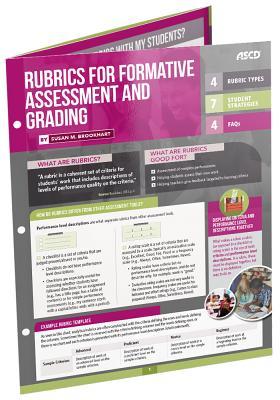
A rubric is a coherent set of criteria for student work that describes levels of performance quality. Sounds simple enough, right? unfortunately, rubrics are commonly misunderstood and misused.
Rubric overview and creation rubrics help students recognize learning goals and guide them in reaching for those goals. Particularly useful in student-directed teaching approaches, like inquiry-based learning, rubrics can be used to assess content mastery, skill development, or even attitude toward a topic.
Important: when developing a rubric for program assessment, enlist the help of colleagues. Rubrics promote shared expectations and consistent grading practices which benefit faculty members and students in the program. Rubrics are in our rubric bank and more are available at the assessment office (hard copy).
Consider the role of rubrics in how students present their ideas. Viewed as more than an assessment, rubrics can also provide feedback to teachers, further.
Don’t be worry how to create and use rubrics for formative assessment and grading can bring any time you are and not make your tote space or bookshelves’ grow to be full because you can have it inside your lovely laptop even cell phone.
A rubric is a coherent set of criteria for students' work that includes descriptions of levels of performance quality on the criteria. The benefit of using rubrics in formative assessment is that they can be descriptive and not evaluative.
Task-specific rubrics and scoring schemes for special purposes proficiency-based rubrics for standards-based grading checklists and rating scales: not rubrics, but in the family more examples rubrics and formative assessment: sharing learning targets with students.
The formative assessment rubric will also be used at the end of the unit of work to assess students’ development in the analysis and evaluation of visual conventions and to evaluate artworks. Students’ understanding and knowledge of techniques and process of weaving will also be explicitly assessed as well.
The scoring rubrica case studythe scoring rubric has an innate capability to ensure formative assessment as it, by its very definition, describe where the student is in relation to the objective, and the goals that are -or are not achieved, thereby inferring a potential gap between the present stage and the objective and what to focus on to get to that objective.
Rubrics, often developed around a set of standards or expectations, can be used for summative assessment. Rubrics can be given to students before they begin working on a particular project so they know what is expected of them (precisely what they have to do) for each of the criteria.
Formative assessment, rubrics, and (that pesky ol’ issue of) grades september 12, 2016 nate formative assessment� grading� learning-based grades� rubrics� standards-based grading 1 comment.
Each rubric describes both the teacher role in a particular formative assessment dimension and also the student role.
'a rubric is a coherent set of criteria for students' work that includes descriptions of to give feedback on learning and teaching (focus on formative assessment.
This integration of performance and feedback is called ongoing assessment or formative assessment.
Rubric use in formative assessment: a detailed behavioral rubric helps students improve their scientific writing skills.
Emma is a primary school teacher who uses rubrics as a formative assessment tool with her year 6 writing class. Emma developed the rubric prior to commencing the persuasive writing unit. Emma gets her students to initially use it to self- assess their writing ability and to develop learning goals.
It is a formative type of assessment because it becomes an ongoing part of the whole teaching and learning process. Professionals are involved in the assessment process through both peer and self-assessment. Many experts believe that rubrics improve professionals' end products and therefore increase learning.
Rubrics: a definition rubrics have become a highly touted and ubiquitous tool in the proverbial assessment toolbox of higher education instructors. Rubrics can provide a wide range of benefits, from providing consistent feedback to students to decreasing overall grading time.
Used as formative assessment, rubrics help both instructors and students monitor the areas in which students are succeeding and struggling.
Work in progress: developing single point rubrics for formative assess- ment.
The rubrics re!ect the ten dimensions of formative assessment that together form an integrated set of formative assessment practices. • using self-re!ection against the rubrics and getting feedback from a peer observer are ways to address.
Get this from a library! how to create and use rubrics for formative assessment and grading. [susan m brookhart] -- whether you're already familiar with rubrics.
Formative assessment and differentiation rubric not yet evident (0) emerging (1) basic (2) proficient (3) exemplary (4) data analysis (feap, 2a4a and 4d) teacher does not refer to data to make decisions regarding differentiating instruction. Teacher makes students aware of progress only through progress reports and report cards.
Rubrics can be used for any assignment in a course, or for any way in which you ask when used by students as part of a formative assessment, they can help.
What is a rubric? a rubric is a coherent set of criteria for students' work that includes descriptions of levels of performance quality on the criteria.
The rubrics reflect the ten dimensions of formative assessment that together form an integrated set of formative assessment practices. • using self-reflection against the rubrics and getting feedback from a peer observer are ways to address.
Rubrics will describe what an ideal assignment looks like, and “summarize” expected performance at the beginning of term, providing students with a trajectory.
Rubrics for formative and summative assessments finally, one type of evaluation that can be used for both formative and summative assessments is a rubric. Brookhart defines a rubric as “a coherent set of criteria for students’ work that includes descriptions of levels of performance quality on the criteria.
Developing an interim formative assessment and writing rubric for ells in grades 2-8 tracey kline and chad leith salem public schools and salem state university tool both the sei writing rubric and the process undertaken to create and implement it have potentially significant implications for other schools and districts.
A rubric creates a common framework and language for assessment. Well-trained reviewers apply the same criteria and standards. Rubrics are criterion-referenced, rather than norm-referenced.
Brookhart 2013-01-11 what is a rubric? a rubric is a coherent set of criteria for student work that describes levels of performance quality. Sounds simple enough, right? unfortunately, rubrics are commonly misunderstood and misused.
Formative assessment formative assessment is any assessment that is used to improve teaching and learning. Assessment is a three-step process by which evidence is collected, interpreted and used. Best-practice formative assessment uses a rigorous approach in which each step of the assessment process is carefully thought through.
Rubrics usually contain evaluative criteria, quality definitions for those criteria at particular levels of achievement, and a scoring strategy. They are often presented in table format and can be used by teachers when marking, and by students when planning their work.
* important differences between rubrics and other assessment tools such as checklists and rating scales, and when such alternatives can be useful; and * how to use rubrics for formative assessment and grading, including standards-based grading and report card grades.
* common misconceptions about rubrics; * important differences between rubrics and other assessment tools such as checklists and rating scales, and when such alternatives can be useful; and * how to use rubrics for formative assessment and grading, including standards-based grading and report card grades.
Chapters focus on the six interrelated elements of formative assessment: (1) shared learning targets and criteria for success, (2) feedback that feeds learning forward, (3) student self-assessment and peer assessment, (4) student goal setting, (5) strategic teacher questioning, and (6) student engagement in asking effective questions.
Rubrics can be both formative (ongoing) and summative (final) assessment tools for evaluating written work, projects, oral presentations, or any other class assignment. There are four types of rubrics: checklists, holistic rubrics, analytic rubrics, and developmental rubrics.
Ann bell's rubric helps students assess what makes a good podcast. Oral presentation rubric (word doc) voicethread participation rubric (pdf) michelle pacansky-brock's general formative assessment is used when students view a mini video lecture/presentation.
Formative and summative assessments assessment allows both instructor and student to monitor progress towards achieving learning objectives, and can be approached in a variety of ways. Formative assessment refers to tools that identify misconceptions, struggles, and learning gaps along the way and assess how to close those gaps.
Really good rubrics help teachers avoid confusing the task or activity with the learning goal, and therefore confusing completion of the task with learning. Most rubrics should be designed for repeated use, over time, on several tasks.
10 apr 2018 panadero and jonsson (2013) specifically addressed the use of rubrics in formative assessment and the fact that formative assessment begins.
Exemplars rubrics are excellent tools for assessing student work and for encouraging student self- and peer-assessment. Our performance material includes standards-based rubrics that define what work meets today's standards, allowing teachers (and students) to distinguish between different levels of performance.
Formative assessments confirm what a student has mastered and identify the learning that comes next for the student. This improves learning because instruction can be adjusted while there is still time to act – before the graded event. Formative assessments involve students in evaluating their own thereby.
Part 1: describing a learning continuum part 2: developing a formative assessment rubric part 3: collecting, interpreting and using evidence to plan for teaching.
Creating rubrics information taken from formative assessment and standards-based grading robert marzano 2010 today's learning goals distinguish an effective and ineffective rubric identify the characteristics of an effective rubric create an effective rubric referencing chapter 1, grading smarter, not harder, how do we separate behaviors from academics?.
Learning progression guided by formative assessment: self-reflective rubric. Formative assessment is a planned, continuous process teachers and students.
Formative assessment is clear and is used to improve instruction. Formative assessment is not only used to improve instruction it is used holistically to improve the student experience in all ways.
▻ rubrics are scoring tools that can be used for summative or formative assessment purposes.
Assessment helps instructors and students monitor progress towards achieving learning objectives. Formative assessment is used throughout an instructional period to treat misconceptions, struggles, and learning gaps. Summative assessments evaluate learning, knowledge, proficiency, or success at the conclusion of an instructional period.
In - buy how to create and use rubrics for formative assessment and grading book online at best prices in india on amazon.
Rubrics can be used for any assignment in a course, or for any way in which you ask students to demonstrate what they've learned. They can also be used to facilitate self and peer-reviews of student work.
Rubric for formative assessment 100 % enter rubric description� strategic student has difficulty determining if numbers are prime either through the strategy given in this lesson or a more traditional one such as using prime numbers of lower value to divide with a higher prime number.
Teachers and students can both use rubrics to assess learning tasks. • both google and microsoft have digital rubric functionality.
It is a set of criteria and standards linked to learning objectives that is used to assess a student's performance.
► rubrics are scoring tools that can be used for summative or formative assessment purposes. ► rubrics mediate improved performance for instance by increasing transparency. ► topic/performance assessed does not seem to affect the formative effects of rubrics. ► effects of personal differences on the formative use of rubrics need further research.
Used as summative assessment, rubrics give concrete rationale for the grade that students receive. Used as formative assessment, rubrics help both instructors and students monitor the areas in which students are succeeding and struggling.
Rubrics are usually categorized by two different aspects of their composition. One is whether the rubric treats the criteria one at a time or together. The other is whether the rubric is general and could be used with a family of similar tasks or is task-specific and only applicable to one assessment.
A rubric is an explicit set of criteria used for assessing a particular type of work or a rubric designed for formative and diagnostic assessments might have more.
Social-emotional rubrics for formative assessment: psychometric properties and developmental trends during adolescence.
When used by students as part of a formative assessment, they can help students understand both the holistic nature and/or specific analytics of learning expected, the level of learning expected, and then make decisions about their current level of learning to inform revision and improvement (reddy.
Role that rubrics can play in the process of formative assessment. Keywords writing skills, scoring rubrics, measurement, evaluation, assessment.
In corporate training, rubrics can be used in project-based learning to review what has been created and demonstrate the skill being taught. Rubrics are useful for peer review, as well, for evaluation by a trainer or manager reviewing the work product.
To further explore elearning evaluation and assessment, download the elearning guild’s research report, evaluating learning: insights from learning professionals. How to create and use rubrics for formative assessment and grading.
Writing rubrics for formative and summative assessment developed for the nrcal professional development seminar (july 20-24, 2015) by james hussar, associate.
Post Your Comments: