Read China's Great Migration: How the Poor Built a Prosperous Nation - Bradley Gardner | ePub
Related searches:
China's Great Migration: How the Poor Built a Prosperous Nation
China's Great Migration: How the Poor Built a - Cato Institute
Bradley M. Gardner China's Great Migration: How the Poor Built a
China's Great Migration and the Prospects of a More Integrated
China's Great Migration: How the Poor Built a Prosperous Nation by
Teaching with China's Great Migration: How the Poor Built a
Interview: Understanding China's 'Great Migration' – The Diplomat
Amazon.com: China's Great Migration: How the Poor Built a
China's Great Migration : How the Poor Built a Prosperous
Interview: Understanding China’s ‘Great Migration’ – The Diplomat
The Great Migration - HISTORY
The Children of China's Great Migration 9781108834858 - bol.com
China's “Great Migration”: The impact of the reduction in trade policy
The Great Migration - Edward Elgar Publishing
The Children of China's Great Migration eBook: Murphy, Rachel
The Children of China's Great Migration: Amazon.co.uk: Murphy
The Children of China's Great Migration - Bookshop
The Age of Migration in China - JSTOR
China's peasants left for the cities to seek their fortune, and it made
Teaching with China’s Great Migration: How the Poor Built a
China’s Great Migration: Books: The Independent Institute
CHINA'S GREAT MIGRATION How the Poor Built a Prosperous
Chinas Great Migration: How the Poor Built a Prosperous
The Children of China's Great Migration by Rachel Murphy
Three Gorges Migration Not the Largest in Chinese History - China.org
The Children of China's Great Migration - Rachel Murphy
Chongqing's Challenge – The Cairo Review of Global Affairs
China’s Great Migration and the Prospects of a More
China’s Great Uprooting: Moving 250 Million Into Cities - The
Continuity and Change in the Everyday Lives of Chinese Migrant
Regional China: internal migration - The Economist Intelligence Unit
Educating the children of migrants in China and the United States: a
The Great Migration: Rural-Urban Migration in China and Indonesia
Chinese Migrations in the Mid-Late 19th Century Asia Pacific
Domestic migration - Why people should leave the countryside
Inside China: 6. The Great Migration - YouTube
Great Migration Article about Great Migration by The Free
The Great Migration - American Experience
China's great migration: Following the journey home
The great migration Article about The great migration by
The Great Migration - Bloomberg
The Great Migration - Video on Demand - CNA
China's Great Migration'': The impact of the reduction in
The Children of China’s Great Migration: A Conversation with
The Greatest Migration: China's Urbanization HuffPost
The end of the Great Migration: China's workers return home
In china's great migration: how the poor built a prosperous nation, author bradley gardner looks at one of the most important but least discussed forces pushing.
The end of the great migration: china’s workers return home� rob schmitz oct 3, 2012. Xijiang was a poor mountain town in china’s poorest province.
“china’s great migration: how the poor built a prosperous nation is important because of its message of economic transformation,” said robert ade, communications manager at independent institute. “pulling over 700 million people of people out of poverty came about not by bureaucratic initiative, but by chinese peasants leaving the country to go to the cities in search of better lives.
China’s internal migrants china’s rapid economic development has been fueled in large part by a massive migration of rural workers to cities and industrial zones.
Gardner in his recent book, china’s great migration: how the poor built a prosperous nation, makes a persuasive case that the single most important factor in china’s dramatic rise from poverty to prosperity was the simple fact that beijing got out of the way — that bejing was forced to get out of the way — and allowed people to connect with more-productive uses of their labor. From the 1970s until now, 287 million workers left the chinese countryside to work in the cities.
Today in every major for a long time, research on migration and urbanization in china was hampered by a why poor people stay poor: urban bias in world development.
4 jan 2012 most of china's roughly 145 million rural-to-urban migrants were born having migrated after limited years of schooling, migrants face high of any task work: migrants never complained about poor or unfair treatme.
Using children's voices, murphy provides a multi-faceted insight into experiences of parental migration, study pressures, poverty, institutional discrimination,.
Using children's voices, she provides a multi-faceted insight into experiences of parental migration, study pressures, poverty, institutional discrimination, patrilineal.
In 2009, there were 145 million rural-urban migrants in china, accounting for about 11 percent of the total population. Among them, an estimated 85 million to 100 million were born after 1980 — a period when three distinct government policies converged to shape the circumstances for increased rural-to-urban migration within china.
20 aug 2020 the children of china's great migration she provides a multi-faceted insight into experiences of parental migration, study pressures, poverty,.
The survey results have been analysed and the papers were published in may 2010 by edward elgar publishing, uk in a book entitled 'the great migration'.
China and mexico are both developing countries that have experienced largescale migration in recent decades. Migration, driven by the urbanization process in china since the 1980s, is the largest.
Downloadable (with restrictions)! we analyze the effect of china's integration into the world economy on workers in the country and show that one important.
In china's great migration: how the poor built a prosperous nation� author bradley gardner looks at one of the most important but least discussed forces pushing china's economic development: the migration of more than 260 million people from their birthplaces to china's most economically vibrant cities.
Her latest book, the children of china’s great migration (2020), was enabled by a british academy mid-career award. She is developing new projects to explore selected social problems emerging as part of china’s urbanisation.
Because i hoped to understand what had prompted her to forsake her village in china's southwest for the grinding life of an assembly-line worker in the nation's export.
China’s great lunar new year migration: following the journey home. 'rich or poor, home for the holiday' — came to beijing from southern china's watery city of shaoxing in zhejiang.
25 jun 2018 population migration and the children of immigrants in the us and china because the greatest challenge for education systems is integrating children of high levels of mobility, residential segregation and poor hous.
Gardner outlines how the migration of over 260 million chinese people from rural china to urban centers helped transform the chinese economy into the second largest in the world. The migration was so large and rapid that it forced the government to greatly loosen its control over the economy.
China's great migration: how the poor built a prosperous nation.
20 aug 2020 using children's voices, she provides a multi-faceted insight into experiences of parental migration, study pressures, poverty, institutional.
14 dec 2017 china's great migration: how the poor built a prosperous nation� oakland, ca: independent institute, 2017.
Guizhou, one of the poorest provinces in china, is developing a burgeoning big data sector,.
They also found the floating population to be concentrated on the urban fringe, with living conditions that were quite poor.
The travel season in china usually begins 15 days before new year's day and lasts for around 40 days. 9 billion passenger journeys during that year's chunyun season. It has been called the largest annual human migration in the world.
The great migration: rural-urban migration in china and indonesia. Edited by xin meng and chris manning, with li shi and tadjuddin noer effendi.
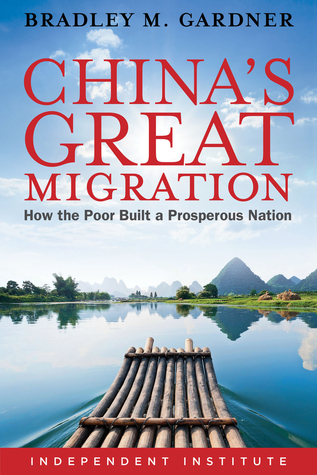
China’s great migration is the story of 260 million people who have worked hard, taken risks, and challenged the status quo in order to escape poverty and build a better life for themselves and their families. China’s economic surge over the past thirty years is a story of mass migration—the largest migration in human history—as more than 260 million people left the countryside in search of urban jobs.
Understanding china's “great migration” (scheineson, 2009) is important both because of the sheer size of the phenomenon, and because of the impact it has had on china's economy and society. As of 2014, china's national bureau of statistics estimated that 278 million individuals – or 20% of the country's total population – lived outside their home towns for at least 6 months each year.
History, the widespread migration of african americans in the 20th century from rural communities in the south to large cities in the north and west. It is estimated that from 1916 to 1970 some six million black southerners relocated as part of the great migration.
In 1982 the people's communes were dissolved creating surplus labor. In 1984 permission was given to peasants to move to towns of 100,000 inhabitants or less. In 1986 the state allocation of jobs and lifetime employment practices were abolished leading to the migration of peasants. Urban population has increased 30-50 million annually since 1985.
Women made it to a city, they were barred from buying food, notes bradley gardner in “china's great migration”.
In china’s great migration: how the poor built a prosperous nation, author bradley gardner looks at one of the most important but least discussed forces pushing china’s economic development: the migration of more than 260 million people from their birthplaces to china’s most economically vibrant cities.
15 mar 2018 beijing — it has been described as the greatest migration in human history, a mass exodus of hundreds of millions of people from china's.
The great migration in the years preceding world war i, a slow but steady migration of african americans from the rural south to the urban north began. This was the beginning of a phenomenon called the great migration. The rationale for leaving the south was different for every migrant, but largely, the hope for a better life was paramount.
In china’s great migration: how the poor built a prosperous nation, author bradley gardner looks at one of the most important but least discussed forces pushing china’s economic development: the what has caused this dramatic transformation?.
For china as a nation, the great migration has been responsible for an estimated 20 percent to 33 percent of its economic growth since reforms began.
8 feb 2013 household registration system hukou behind china's mass migration. System “in effect, the hukou system now only targets the poor.
Photos: china’s great migration the deeply discriminatory nature of china’s hukou system came into clear focus last month after the fatal collapse of a bridge in henan.
In china's great migration: how the poor built a prosperous nation, author bradley gardner looks at one of the most important but least discussed forces pushing china's economic development: the migration of more than 260 million people from their birthplaces to china's most economically vibrant cities.
China's great migration: how the poor built a prosperous nation, oakland, ca: independent institute, 2017.
What makes china's migration so mind-blowing, however, is its scale and speed. The scale is largely a product of china's size and its delayed development. If the less populous china of the 19th century had urbanized when europe did, we would have been talking about tens of millions, rather than hundreds of millions of migrants.
12 jul 2018 “china's great migration: how the poor built a prosperous nation is important because of its message of economic transformation,” said robert.
In china in 2018 over 200 million rural migrants worked away from their home villages, fuelling the country's rapid economic boom. In the 2010s over sixty-one million rural children had at least one parent who had migrated without them, while nearly half had been left behind by both parents.
China's fast growing economy has created a surplus of jobs available in its' cities, sparking a mass rural to urban migration of young men and women in search.
In arrival city, doug saunders celebrates the urban centres where rural newcomers throng in search of opportunities. Fred pearce shares his enthusiasm for their diversity and how they are reshaping the world.
During the last three decades, china has experienced the largest migration in human history. China's great migration has had transformative social, economic, and demographic consequences for china and the world. In this review, first i provide background on china's household registration system (hukou), which has been in existence since the late 1950s and continues to affect the life chances.
When china’s 170m rural migrant workers head home for new year, it is the biggest movement of people on earth.
The beloved jurong bird park is moving to a new home in mandai. With exclusive behind-the-scenes access, we meet the colourful residents and keepers as they take the first steps towards the big move.
British academy mid-career fellowship – the children of china’s great migration and urbanisation, 2013 - 2014. British academy career development grant – parental labour migration and the wellbeing of children left behind in rural china, awarded in 2007, postponed till 2009, completed 2012.
Abstracthow have chinese migrant workers' patterns of everyday life labor organizations, migration, cross-generation differences, class formation wooden and brick huts into which one or two very poor migrant families crowd,�.
The great migration was the relocation of more than 6 million african americans from the rural south to the cities of the north, midwest and west from about 1916 to 1970.
China's great migration explores how migration, especially after the effects of the cultural revolution, from rural to urban areas has helped china's economy grow and has decreased the amount of people living in poverty.
The world’s largest migration, known as the ‘floating population,’ has not only affected china’s economic reform, but has shaped millions of children. In 2017, a report stated that china has an “estimated 287 million rural migrant workers” to look for greater job opportunities.
Gardner details this process, and its implications for china’s future and the world, in his new book, china’s great migration: how the poor built a prosperous nation.
As china develops economically and ages, perhaps the greatest consequence for migration and the west will be that china will contribute to an increasing competition for labor within the global system as it, too, must seek out workers for its labor market.
Post Your Comments: