Download Anti-Bias Education in the Early Childhood Classroom: Hand in Hand, Step by Step - Katie Kissinger | ePub
Related searches:
Anti-Bias Education in the Early Childhood Classroom: Hand in
Anti-Bias Education in the Early Childhood Classroom: Hand in Hand, Step by Step
Understanding Anti-Bias Education: Bringing the Four Core
Amazon.com: Anti-Bias Education in the Early Childhood
Reflecting on Anti-Bias Education in Action: The Early Years
Building Anti-Bias Early Childhood Programs: The - PDXScholar
The anti-bias approach in early childhood education
Redefining the Norm: Early Childhood Anti-Bias Strategies
“Who's got the power?”: A critical examination of the anti-bias
Start Seeing Diversity: The Basic Guide to an Anti-Bias Classroom
Anti-bias Education in the Learning Environment — Early Years
The Goals of Anti-bias Education Clearing Up Some Key
Anti-Bias Education in the Early Childhood Classroom Taylor
Anti-Bias Education in the Early Childhood Classroom 1st
Anti-Bias Education: The Power of Social-Emotional Learning
Anti-Bias Early Childhood Education in the works at Jefferson
INTRODUCING THE Teaching Tolerance Anti-bias Framework
ECE 7350 The Anti-Bias Curriculum in Early Childhood Education
Implementing an Anti-Bias Curriculum in the Early Childhood
How to Start Talking About Race in the Early Elementary
Anti-Bias Education in the Early Childhood Classroom Hand in
Confronting Our Discomfort: Clearing the Way for Anti-Bias in
Anti-Bias Education in the Early Childhood Classroom : Hand
Anti-bias education in the early childhood classroom : hand
The Role of Implicit Bias in Early Childhood Settings
Studies support that biases are formed in early childhood and before age five, children are showing a preference for white faces. Childcare providers have the ability and responsibility to mitigate development of those early prejudices through their every interactions with children and through their curriculum.
The differences between anti-bias approaches and inclusive practices; a variety of theories and perspectives that have shaped anti-bias approaches; how to create change with a view to equity. Please allow this time to view this session as your progress through the webinar cannot be saved.
If this is not possible in your program, you can still use the anti-bias framework in your own classroom. Look for numerous further strategies and activities in celebrate: an anti-bias guide to including holidays in early childhood programs (bisson, 2016), and in anti-bias education for young.
Anti-bias education in early childhood: professional development program: aprendizaja a distancia sobre fundamentos y seguridad: professional development program: early intervention: professional development program: emergency preparedness: professional development program: expulsion and suspension strategies: professional development program.
Anti-bias curriculum is an approach to early childhood education that sets forth values-based principles and methodology in support of respecting and embracing differences and acting against bias and unfairness. Anti-bias teaching requires critical thinking and problem solving by both children and adults. The overarching goal is creating a climate of positive self and group identity development, through which every child will achieve her or his fullest potential.
If you want unbiased news, there's only one tv news channel that will deliver that. Most news channels have an agenda based on their commercial relationships. A sports reporter for fox news isn't going to tell the viewers that the previous.
Anti-bias early education and holiday celebrations: staying neutral what’s the best way to maintain an anti-bias curriculum during the holiday season? for laura salter, center director of signal peak early learning center at the central arizona college campus in coolidge, the answer is to maintain a “policy of neutrality.
Anti-bias education is an approach to teaching designed to increase understanding of differences and their value to a respectful and civil society, and to actively challenge bias, stereotyping and all forms of discrimination.
Full version anti-bias education in the early childhood classroom: hand in hand, step by step.
An anti-bias curriculum aims to give all preschoolers a sense of belonging while nurturing respect for diversity. Preschool teachers who use an anti-bias curriculum want all students to feel successful and empowered without being saddled with stereotypes or harmful comments. Turning the theory of no biases and stereotypes into a reality in the classroom happens when a preschool teacher takes control of her own actions and the activities and materials within the classroom.
The effort to learn about and implement a race-conscious, antibias approach to early childhood education got under way in the fall when we began meeting regularly to discuss our own experiences with race and diversity. Over several weeks, we also participated in professional development activities led by penn state’s affirmative action office.
Anti-bias education work in early childhood is shaped by a deep-seated belief in the importance of justice, the dream of each child being able to achieve all he or she is capable of, the knowledge that together human beings can make a difference. Listen to the voices of children who have experienced anti-bias education at school or at home.
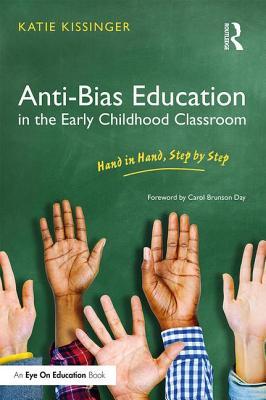
Anti-bias education in the early childhood classroom provides a useful, clearly outlined guide for implementing anti-bias and anti-oppression practices in early childhood education settings. Throughout the book, you’ll find: stories from the field strategies for keeping teaching practices in touch with growing social justice movements.
In the spring of 2016, school readiness consulting launched the equity in early learning initiative (eeli) as a critical step towards ensuring that all children—.
A multicultural/anti-bias approach can help students learn to place a positive value on those differences and to treat all people with respect. It can nurture the development of positive self identity and group identity in not only the students but also the staff and families.
The idja domains are based on louise derman-sparks' four goals for anti-bias education in early childhood.
Anti-bias training for teachers� preschool curriculum, and stand-alone to use as lessons from turtle island: native curriculum in early childhood classrooms.
Louise derman-sparks, ma, has worked with children and adults in early childhood education for more than 50 years and is a faculty emerita of pacific oaks college. She is coauthor of several books, including leading anti-bias early childhood programs: a guide for change, anti-bias education for young children and ourselves, and teaching/learning anti-racism: a developmental approach.
23 sep 2019 in the early childhood field, educators commonly adopt an anti-bias/multicultural curriculum to address such issues with young children.
By sharky, computerworld true tales of it life: useless users, hapless bosses, clueless vendors and adventures in the it trenches.
Starting is the hardest part, so here are some simple ideas and tips to help you dive in to implementing anti-bias in your classroom. For the purposes of beginning to create an anti-bias environment in your classroom we’ll break this down into 3 parts: you, your students (and their families), and the classroom or physical environment.
Throughout their lives they are continually constructing their personaland social identities through the knowledge, skills and behaviors theyacquire through their multiple social and cultural contexts. Bias, discomforts and trauma impacts children’s identities anddevelopment.
– a preschool anti-bias early childhood education programs is being developed at the jefferson elementary school in succasunna, where students in grades k-4 attend.
Multicultural education approach culturally relevant and anti-bias education approach teachers have an obligation to provide their students with a positive environment that will promote their individual needs and interest. Classrooms have a variety of cultures and developmental levels that need to be included when writing lesson plans and daily activities.
This book focuses on the key role education leaders can play in promoting inclusive practices, equity, and social justice in early childhood education.
It is clear that the preparation of teacher candidates to implement anti-bias curriculum is crucial to any process of change. Anti-bias curriculum may be defined as: an active/activist approach to challenging prejudice, stereotyping, bias, and the ‘isms.
An anti-bias curriculum aims to give all preschoolers a sense of belonging while nurturing respect for diversity. Preschool teachers who use an anti-bias curriculum want all students to feel.
We use disability studies in education as a theoretical framework for doing anti-bias work within early childhood education.
Anti-bias education provides opportunities for students, educators and families to learn from and about one another and explore ways to address bias and prejudice through awareness, intervention and personal action. An anti-bias approach fosters positive relationships and an inclusive, welcoming environment for all members of the community.
Gilliam explained that understanding the role implicit bias may play in child care and early learning settings is the first step toward addressing racial disparities in discipline approaches.
Free essay: anti-bias education anti-bias education is important for young children because children begin to recognize differences early on in life.
Drawing on their work in leading anti-bias early childhood programs: a guide for change with louise derman-sparks, john nimmo and debbie leekeenan are releasing their new short film, reflecting on anti-bias education in practice: the early years. The film will release on april 1st for free streaming, along with a facilitator and viewer guidebook.
The idja domains are based on louise derman-sparks’ four goals for anti-bias education in early childhood. The teaching tolerance anti-bias framework was prepared under the guidance of teaching tolerance director maureen costello. The principle writer was emily chiariello, with julie olsen edwards, thom ronk,.
There are a variety of resources available for early childhood leaders to use in order to support their staff to work towards an anti-bias and anti-racist work culture through reflecting on implicit bias. Various aspects to keep in mind when initiating implicit bias training: communicate the importance of training.
There has been an increase in multicultural books and educational materials about diversity that have become available within the last ten or fifteen years. In a short period, the early childhood profession has seemed to embrace the goals of an anti-bias approach. Naeyc now acknowledges the importance of such an approach in position papers, accreditation materials and publications.
Anti-bias education in the early childhood classroom provides a useful, clearly outlined guide for implementing anti-bias and anti-oppression practices in early childhood education settings. Throughout the book, you’ll find: stories from the field strategies for keeping teaching practices in touch with growing social justice movements tasks and questions to spark.
Ece 7350 the anti-bias curriculum in early childhood education. Description: ede 735 the anti-bias curriculum in early childhood education will mosier professor wright state university valuing diversity the primary years introduction – powerpoint ppt presentation.
Most teachers largely learn how to do anti-bias education on the job, in specific set- tings with specific children and families.
8 nov 2018 in this video, renowned early childhood expert dr red ruby scarlet explains what an anti-bias curriculum is in early childhood settings.
Bias deteriorates an individual’s self-esteem and paves way for self-unworthiness especially in the tender age of toddlers. Thus, the early childhood education introduced an anti-bias education curriculum, which accommodates all sorts of children studying under one roof irrespective of their color, gender, disability, among others.
Since then, anti-bias education concepts have become part of the early childhood education narrative in the united states and many other countries.
A job advert can reveal quite a lot about whether an employer holds any biased views. Chancellor's likely to announce pay freeze for public sector staff but expected to promise there will be 'no austerity' job hunting is a challenging proce.
Anti-bias early education little sprouts has engaged in a practice of anti-bias early education since opening our doors in 1982. As outlined by the national association for the education of young children (naeyc), anti-bias early education is a philosophical and tactical approach to creating equitable, open, and nurturing spaces for all children and adults to learn, thrive, and grow.
Anti-bias approach and the irish early childhood care and education policy context.
Throughout their lives they are continually constructing their personaland social identities through the knowledge, skills and behaviors theyacquire through their multiple social and cultural contexts. Bias, discomforts and trauma impacts children’s identities anddevelopment. Depending on their circumstances and contexts, how they absorbmessages about prejudice and social advantage or disadvantage, howthey.
At the university of delaware early learning center our goal is to nurture within each individual a disposition to speak for peace,.
Anti-bias teaching and learning environments in head start and early head start programs viewer’s guide this viewer’s guide summarizes the key ideas for supporting anti-bias teaching and home visiting practices and promoting inclusive learning environments in head start settings.
Investigate the spectrum of commonly used terms in anti-bias and culturally responsive approaches in early childhood education.
A version of this article appeared in the november 02, 2016 edition of education week as anti-bias training for early educators should be a common thread most popular stories open image caption.
Kate taught me the importance of anti-bias teaching and how it should be implemented in the early years of children. For example, when i took her class, it encouraged me to add anti-bias to my curriculum for pre-k students.
Anti-bias education in the early childhood classroom provides a useful, clearly outlined guide for implementing anti-bias and anti-oppression practices in early childhood education settings. Strategies for keeping teaching practices in touch with growing social justice movements.
This is an essential resource for anti-bias education leaders engaged in change in the wide range of early childhood care and education settings. Book features: the principles, guidelines, and strategies needed for school- and program-wide transformation.
An antibias curriculum seeks to nurture children's potential by addressing issues of diversity and equity in the classroom. Goals of antibias curricula are to foster children's self-identity, interaction with people from diverse backgrounds, critical thinking about bias, and ability to stand up for themselves in the face of bias.
Empathy—the ability to understand another’s perspective and emotions—is important in all human social encounters, including teaching. Yet, often teachers have little understanding of the communities where their students live and have trouble understanding their perspectives, leading them to treat these students more harshly.
Cooperative learning is the best method for developing anti-bias awareness and knowledge. Everyone needs the diverse perspectives and honest feedback of peers to develop new insights and teaching practices. Support group members may be other staff, parents, or early childhood teachers who want anti-bias curriculum for their children.
Stephanie is the co-author of the book, “don’t look away embracing anti-bias classrooms”. The book leads early childhood professionals to explore and address issues of bias, equity, and family engagement to ensure culturally responsive experiences. We’ll be giving away one free copy to an attendee of the live webinar.
She has worked in the field of early care and education for the past 25 years as a preschool/kindergarten teacher, teacher educator, and family counselor. She teaches courses on child development and the anti-bias curriculum and presents widely on the local, state, and national levels.
4 core goals of anti-bias education (naeyc): identity, diversity, justice, and activism “ teaching young children about bias, diversity, and social justice ” (edutopia) “talking to children about racial bias” (american academy of pediatrics) “ get comfortable with the uncomfortable: how to talk to your kids about racism ” (ut health).
28 mar 2017 anti-bias education in the early childhood classroom provides a useful, clearly outlined guide for implementing anti-bias and anti-oppression.
Get quick tips of fun easy things you can do with baby, toddler, or preschooler.
Bryan dewan, new research shows connection between race and early childhood suspensions, thinkprogress (mar. Not only has the ripple effect of black educators leaving impacted school discipline, as allen's dissertation preschool-to-prison pipeline suggests, but it also has impacted other areas of education.
Anti bias is the practice of inclusion, which accepts that all people are of value and should be respected.
Because kids’ social and emotional development is a central piece of the elementary curriculum, it’s important to teach lessons about bias, diversity, and social justice, says jinnie spiegler, director of curriculum for the national education division of the anti-defamation league.
With a focus on the leader’s role in initiating and sustaining anti-bias education in programs for young children and their families, this book is both a stand-alone text and a perfect companion.
Ing children tolerance and anti-bias and whether they perceived any barriers to implementing an anti-bias curriculum. Method participants a total of 77 early childhood and elementary school teachers from a large metropolitan area in the southwestern united states participated in the study.
Yw3ca’s early education center team has put together a social justice plan to continue professional development using naeyc’s anti-bias education curriculum. Monthly meetings and weekly discussions will be hosted by eec’s leadership team to improve understanding and application of the curriculum’s objectives in each of our center’s classrooms.
Naeyc defines anti-bias education as a way of teaching that supports children and their families as they develop a sense of identity in a diverse society. It helps children to learn to be proud of themselves and their families, respect a range of human differences, and recognize unfairness and biases, and speak up for the rights of others.
“anti-bias education in the learning environment” will focus on the ways in which learning spaces and materials can best support the rights of the child through the lenses of equity and diversity. Children internalize certain biases as a result of the ways in which different identity groups are represented in children’s books, tv shows, movies, toys, and educational materials.
Cognitive biases are errors in thinking that influence one’s decisions and judgments. They help us make quick decisions but can cause poor judgment. A cognitive bias is a systematic error in thinking that impacts one's choices and judgments.
Abc kids early education for more content to enhance your anti-bias curriculum, visit: family, community and culture and extension ideas.
Feb 1, 2017 - anti-bias curriculum is an approach to early childhood education that sets forth values-based principles and methodology in support of respecting and embracing differences and acting against bias and unfairness. Anti-bias teaching requires critical thinking and problem solving by both children and adults.
In recent weeks, we have been reminded of the detrimental importance of ensuring early childhood program staff are resisting racism and actively working against systems of oppression toward marginalized groups. An anti-racist approach to education is needed in order to heal and bring reconciliation for years of oppression and heartache for families and children of color and other marginalized communities.
The results of the study also led to recommendations for future research in the areas of anti-bias teaching and early childhood education.
Anti-bias education in the early childhood classroom� hand in hand, step by step. London� taylor and francis, ©2017: material type: document, internet resource: document type: internet resource, computer file: all authors / contributors: katie kissinger.
People want to be acknowledged for what they have accomplished. An award-winning team of journalists, designers, and videographers who tell brand stories through fast company's distinctive lens what’s next for hardware, software, and servic.
At the university of delaware early learning center our goal is to nurture within each individual a disposition to speak for peace, understanding and justice. In our classrooms and program, we are pursing the four core goals of anti-bias education for young children, as outlined in the book anti-bias education for young children and ourselves by louise derman-sparks and julie olsen edwards.
Jul 29, 2015 - anti-bias curriculum is an approach to early childhood education that sets forth values-based principles and methodology in support of respecting.
Anti-bias education (or curriculum) is the approach in early childhood education to set values of respecting, embracing difference and acting on bias and unfairness.
The first of its kind, sparks' work changed the landscape of early childhood education—introducing curriculum that empowers children and promotes critical.
It is never too early to begin this work, and there is much that teachers and caregivers of the youngest children can do to provide children with a good start in this area. As is true for all age groups, multicultural/anti-bias education must be approached in a developmentally appropriate manner for infants and toddlers.
I feel that one of the best ways for early childhood educators to practice anti-bias education principles is to create a learning environment with materials that allow children to creatively explore and make meaning around a wide range of social and personal identities.
The anti-bias curriculum is an activist approach to educational curricula which attempts to challenge prejudices such as racism, sexism, ableism, ageism,.
2 anti-bias education in a preschool where the teacher engages children to examine stereotyping and omissions in their books, a 5-year-old writes in awkward printing, “this book is irregular. ” why teachers do anti-bias education anti-bias work is essentially optimistic work about the future for our children.
Early childhood professionals, families, and children build positive and goal-oriented relationships. Acknowledging and addressing behaviors that result from unconscious biases has the potential to improve teacher-family relationships.
Anti bias education in the early childhood classroom book description� anti-bias education in the early childhood classroom provides a useful, clearly outlined guide for implementing anti-bias and anti-oppression practices in early childhood education settings.
Stay informed on topics like early education, student loans, college admission practices and more. The heightened stress and demands of being a teacher during the covid-19 pandemic have.
Anti-bias education is a commitment to supporting children who live in a highly diverse and yet still inequitable world. It is an underpinning perspective and framework that permeates everything in early childhood education.
Post Your Comments: