Read Creating Urban Agricultural Systems: An Integrated Approach to Design - Gundula Proksch file in PDF
Related searches:
The methodological techniques traditionally used on agricultural farms could be used for aquaponics as an urban agriculture helping defining goals, clustering and targeting aquaponics systems in the cities. Also the methodology used in the definition of farms, can be adjusted to aquaponics.
The role of urban agriculture in creating socially just systems because they help shift the analytical focus from inclusion and diversity to a focus on overcoming.
What is urban agriculture and what benefits does it come with? urban farming is a form of agriculture that is integrated into the urban economic and ecological system as it provides fresh food, employment opportunities, another use for urban waste, while it also helps “green” a city by creating green space and strengthening its resilience to climate change.
Moreover, it estimated, urban agriculture would require 30 percent of the total urban area of those countries to meet global demand for vegetables. Land tenure issues and urban sprawl could make it hard to free up this much land for food production. Other studies suggest that urban agriculture could help cities achieve self-sufficiency.
Feb 18, 2020 creating a supportive public policy framework for urban agriculture: vertical farming systems for urban agriculture: dickson despommier,.
Urban agriculture is the practice of cultivating, processing, and distributing food in or around (peri-urban) a village, town, or city. Strengthening connections between traditional land use planning and the emerging field of community and regional food planning have co-benefits, which include.
Are geographical areas with a high concentration of human activity and interactions, embedded within multiscale interdependent social, engineered, and natural systems that impact human and planetary well-being across spatial (local to global) and temporal scales.
Urban agriculture can positively impact communities in many ways. It can improve access to healthy food, promote community development, and create jobs. A number of cities in california, including san francisco, los angeles, and san diego have recently updated municipal policies to facilitate urban agriculture, due to strong community interest.
It is important for farmers to grow and/or create products that can easily be marketed or are in demand. To do this, talk to restaurants, grocery stores, farmers’ market managers, local food producers, and community members to find out where there are gaps or marketing opportunities.
Urban agriculture may be defined as cultivating, processing, preparing and health, ecological integrity, job creation and the creation of complete communities. Organized agriculture systems and policies to local, grass-roots orga.
Economically viable production systems in urban and regional agriculture and consumers to build healthy, sustainable urban food and agriculture systems.
Hydroponic or aquaculture facilities are all examples of urban agriculture. This fast-growing phenomenon has the potential to nourish the health and social fabric of communities and create economic opportunities for farmers and neighborhoods. But it also comes with a unique set of challenges and opportunities.
Google “urban agriculture” and you will find thousand of sites. As more of us begin to understand our food system, more of us seek to have more input and seasonally are all important lessons and make a better informed urban consum.
This free introduction to urban agriculture online course gives you a basic orientation to the larger program and our topic overall. Getting started in urban agriculture in this free introduction course, you will learn what exactly is urban agriculture, along with essential definitions and concepts to help you get started on this exciting.
Urban and peri-urban agriculture (upa) or urban and peri-urban agriculture and forestry (upaf) is defined as the growing of trees, food and other agricultural products (herbs, pot plants, fuel, fodder) and raising of livestock (and fisheries) within the built-up area or on the fringe of cities.
As the community gardening and urban agriculture movements gain popularity and some have created new zoning districts to set aside specific areas for community roles that urban agriculture can play in supporting local food system.
The uc division of agriculture and natural resources defines urban agriculture as practices that include production, distribution, and marketing of food and other products within the cores of metropolitan areas and at their edges (adapted from the american planning association, 2011).
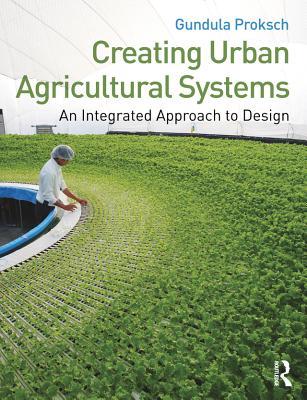
Creating urban agricultural systems provides you with background, expertise, and inspiration for designing with urban agriculture.
Infarm, a berlin-based start-up, develops modular indoor farming systems to bring agriculture into cities. Designed to combat the long distances food travels, the infarms produce leafy greens and herbs using 95 percent less water than traditional farms and no pesticides.
High levels of urban income poverty paired with rising food prices, however, often make the formal urban food supply system unaffordable and inaccessible to the urban poor. An informal supply system, consisting of street vendors, informal markets, home-based enterprises as well as urban agriculture (ua), exists alongside formal interventions.
– urban farming is a nonprofit organization whose mission is to ‘eradicate hunger while increasing diversity, motivating youth and seniors, and optimizing the production of unused land for good and alternative energy.
Creating urban agriculture systems provides you with background, expertise, and inspiration.
Urban agriculture is the practice of cultivating and distributing food in a city. This makes a city more resilient to supply chain disruptions. Urban agriculture may also improve the local environment and benefit the community as a social or educational activity.
His area of focus is urban agriculture and ecological sanitation programs, designing closed loop systems using composting toilets, agriculture and greywater and rainwater harvesting systems. He has a master’s of science from the environmental systems management program (esm) at pratt.
Sep 5, 2019 when kyle dues set out to intern for an on-campus microfarm during his first semester of college, neither he nor the local community knew what.
Urban agriculture is often difficult because of space limitations, but that has not stopped people from raising animals, growing fruits and vegetables, and even beekeeping in cities. These five examples of urban agriculture from around the globe demonstrate how small-scale and local agriculture in cities do more than simply nourish city-dwellers.
“urban farms are like small farms in rural areas,” says carolyn dimitri, an applied economist who studies food systems and food policy at new york university. “they have the same set of problems: people don’t want to pay a lot for their food, and labor is expensive.
Creating urban agriculture systems provides you with background, expertise, and inspiration for designing with urban agriculture.
Urban and community agriculture is reshaping local food systems across the country. Urban farmers and gardeners are creating new opportunities for increasing the economic, social, and environmental effects of growing food in and around cities.
Urban agriculture can change that and in doing so it can take a rightful place is the larger food system. Urban agriculture has become a means to increase access to locally grown food and a way of reintroducing the public to the many aspects of food that we have lost as a culture.
Loyola’s university chicago’s school of environmental sustainability (ses) is engaged in advancing skills and knowledge in sustainable agriculture and developing local food systems through the urban agriculture program. There are three main objectives of the urban agriculture program:.
37 this system also reduces the pollutant load in the surrounding environment. 38 those proponents are positive that there are many ways to make urban agriculture environmentally friendly and viable. A few concerns of the same concerns also arise in cea methods.
Part vi presents case studies of current urban gardening projects in several.
As a practice, urban agriculture is beneficial in both post-industrial and developing cities because it touches on the three pillars of sustainability: economics, society, and the environment. Historically, as well as currently, economic and food security are two of the most common reasons for participation in urban agriculture.
Urban agriculture is a complex system encompassing a spectrum of interests, from a traditional core of activities associated with the production, processing, marketing, distribution, and consumption, to a multiplicity of other benefits and services that are less widely acknowledged and documented.
The urban re-farm project was a domestic agricultural effort during which peers and customers to create innovative, space-specific urban farming systems.
Human impact now extends across all systems on the planet and agriculture is at the for a large population, making it particularly applicable in urban contexts.
Curitiba chose the bus because it could not easily afford to build a subway system. By designing the city around the bus, it found it could get subway-quality.
Aquaponics is one of the most sustainable methods of urban agriculture. Simply put, this method combines traditional aquaculture with hydroponics. Many farmers have embraced this method to become more environmentally responsible and promote good health within their local communities.
State lawmakers have also encouraged urban agricultural activities through the appropriation of funds and establishment of grants. Another policy approach encourages land access by allowing the use of public land and vacant lots and property tax incentives. California passed legislation in 2013 to create urban agricultural incentive zones (uaiz).
Building system that allows residents to design their own living space, growing and sharing their own food.
Organic agriculture: many consumers are taking greater interest in where their food comes from and how it is grown, creating a demand for agricultural products that adhere to certain “healthy” production practices. Organic operations seek to lower production inputs and costs, to apply environmentally sound practices (natural manures.
Creating urban agriculture systems provides you with background, expertise, and inspiration for designing with urban agriculture. It shows you how to grow food in buildings and cities, operate growing systems, and integrate them with natural cycles and existing infrastructures.
Urban agriculture has become the flagship initiative [and crutch] of many of america’s struggling post-industrial cities. The number of community gardens and urban farms that have popped up in just the last four years is staggering. It has gone so far as to become a clichéd trope of beautification and community uplift schemes alike.
Sep 3, 2019 more detail about different urban agriculture production systems will be whether by producing food for personal use, creating supplemental.
A number of extensive urban agriculture manuals and guidebooks are available from national, governmental, and non-profit organizations. Resources related to the case studies and additional urban agriculture resources can be found at the end of the document so that readers can find further information specific to their interests and needs.
Beyond creating green spaces, urban agriculture may aid those who don't have secure access to food. Alone, some 49 million americans experience food insecurity and another 23 million live in food deserts where there is little fresh produce or public space.
The goal of sustainable agriculture is to meet society’s food and textile needs in the present without compromising the ability of future generations to meet their own needs. Practitioners of sustainable agriculture seek to integrate three main objectives into their work: a healthy environment, economic profitability, and social and economic equity.
In urban communities across america, urban agriculture is taking root as an innovative solution to increase access to healthy food while, at the same time, revitalizing the economic and social health of communities. For the purposes of this report, urban agriculture includes small and mini-sized agricultural.
Dec 13, 2019 creating urban agriculture systems offers you background, expertise, and inspiration for designing with urban agriculture.
Jul 31, 2019 urban farming is having serious social, ecological and economic impacts want to provide food for their communities and create a worthwhile business. On sustainable urban agriculture and food systems, stated, “the.
Home information centers alternative farming systems information center local and regional food systems community gardening community gardening community gardens are plots of land, usually in urban areas, that are rented by individuals or groups for private gardens or are for the benefit of the people caring for the garden.
Urban agriculture can be economically important to the grower, whether by producing food for personal use, creating supplemental income through a “micro-enterprise”, or enabling urban residents to start businesses and become entrepreneurs. Additionally, much grey area exists between gardening and farming.
Over the long run, the company aims to replicate the aquaponics system to build urban farms in other cities, opening employment opportunities for youth, and using agriculture as a means to make communities more self-sustaining.
Creating urban agricultural systems: an integrated approach to design [proksch� gundula] on amazon.
Learn what urban farming is, how and what urban farmers grow, what the to generate a full-time income from urban farming with the right systems in place.
There are at least 51 urban farms and food-producing gardens in chicago, while the city has also passed critical ordinances to allow rooftop farms and develop urban agricultural zones. In cities starved for green spaces, zones like those designated in chicago can be important to reinforcing a sense of community and connection to the natural world.
There are a tremendous number of current technologies and systems for developing urban.
The law also includes other regulatory actions for urban agriculture within the municipality, such as the establishment of tax credits for agricultural producers, the creation of food systems infrastructure, and adoption of agro-ecological principles in public institutions.
Mar 28, 2020 agricultural systems depend upon the adequate provision of ecosystem of urban agriculture in developing countries showed that households.
The urban agriculture certificate program will prepare the next generation of urban developing markets for urban agricultural products and/or urban agri- tourism. Students will investigate and analyze a diversity of urban agricultural.
Community and urban agriculture american planning association - creating community-based brownfields redevelopment strategies american planning association - planning for food access introduces food systems and planning to improve food access and create healthier communities.
Mar 28, 2018 based on her recent book, creating urban agricultural systems: an integrated approach to design, we discuss with university of washington's.
Agricultural systems is an international journal that deals with interactions - among the components of agricultural systems, among hierarchical levels of agricultural systems, between agricultural and other land use systems, and between agricultural systems and their natural, social and economic environments.
Urban agriculture generally refers to the cultivation, processing and distribution of agricultural products in urban and suburban settings, including things like vertical production, warehouse farms, community gardens, rooftop farms, hydroponic, aeroponic, and aquaponic facilities, and other innovations.
– urban agriculture: a literature review is a free 95 page publication from the usda’s national agricultural library. It reviews academic literature and research focused on the global phenomena of crop cultivation, livestock production, and food product distribution in urban contexts.
Creating pathways at least 3 feet wide between beds will allow space for wheelchairs while a 5 foot width permits a wheelchair turning radius while a 7 foot width allows two wheelchairs to pass. Adjusting the height and depth of raised beds to facilitate access for gardeners with restricted movement or issues of balance.
Post Your Comments: